Seeing Mt. Fuji is high on most people’s lists when visiting Japan, and it was no different for me. After barely 24 hours in Tokyo, I was already on my way to Kawaguchiko, eager for that first glimpse of Fuji-san. A two-hour ride on the Fuji Excursion train, maps and plans in hand—I was all set. Except, fate had other ideas.
But before I get into that, a quick word about kindness. At Shinjuku Station, despite all my obsessive research and early arrival, I simply could not find the right platform. It was overwhelming—until two store attendants, complete strangers, left their counters and walked me all the way to the correct spot. This would be the first of many moments on this trip when I was deeply moved by the warmth and generosity of the Japanese people.
So there I was—ready for a day of exploring—only to arrive in Kawaguchiko in the middle of a typhoon. The rain came down steadily, the mist hung thick, and Fuji-san was nowhere to be seen. To add to it, I learned from the news that this was also the longest stretch since recorded memory of 130 years that Fuji had been visible without snow. Not the start I had hoped for, but not one to give up, I hopped on the Red Line sightseeing bus to Oishi Park, my first stop.

Oishi Park
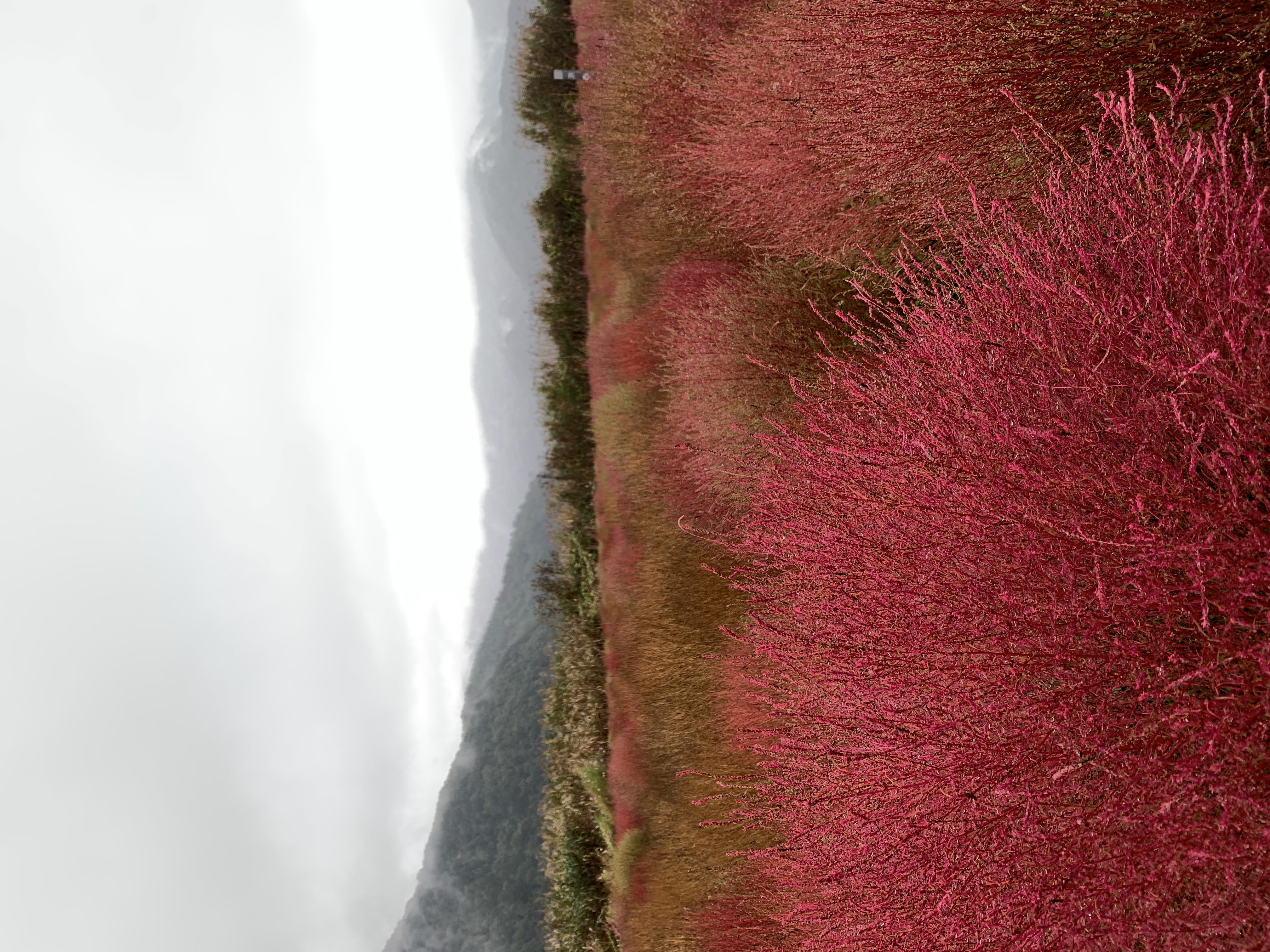
This lakeside park is known for its postcard-perfect view of Mt. Fuji, framed across the lake with bright seasonal flowers in the foreground. In autumn, the kochia bushes blush into brilliant red, creating a stunning contrast against the mountain. I had imagined that very scene—except, of course, Fuji-san was hidden away. The kochia had just started turning, hinting at the spectacle to come, and though it was beautiful, the mountain remained elusive.
Fuji is often called a sacred guardian in Buddhism, a presence that has inspired countless works of Japanese art. They say the mountain reveals itself only when it wishes to, and clearly, this wasn’t my day. I felt a twinge of disappointment, but who was I to question Fuji-san’s will? Instead, I bowed my head in quiet respect and offered a small prayer, asking that he bless me with his presence before my journey was through.


Momiji Tunnel
A little further along the lake lies the Momiji Tunnel, a short stretch of road that in autumn transforms into a fiery canopy of maple leaves. We visited just as the season was beginning—the leaves were only tinged with red at their edges, a quiet promise of the brilliance to come. The drizzle softened everything around us, and while Fuji never showed, there was a gentle beauty in that in-between moment: the hush of rain, the first sparks of color, the sense of waiting for a season to unfold.
Determined to explore despite the weather, we made our way to the Lake Bake Café, a small spot usually blessed with Fuji views. On that day, the mountain was hidden, but the warmth of freshly baked bread made up for it.


From there, we walked along to Nagasaki Park, but by then the rain had soaked through, and we were chilled to the bone. Hungry and tired, we made our way to Momijitei for lunch—and it was exactly what we needed. A steaming pot of hōtō (a hearty local noodle soup, unique to Yamanashi prefecture), rich with vegetables and served in iron bowls, warmed us right through. We tried both the mushroom and pumpkin versions, followed by a scoop of matcha ice cream, and suddenly the grey day didn’t feel so heavy.


Dinner was at Fuji Tempura Idaten, where live music, sake, crisp veggie tempura, and more yoshida udon brought the day to a cheerful close. I even picked up a jar of suridane—a local condiment of fried chili peppers, sesame, and Japanese pepper. Even now, back home, it flavors my soups and instantly takes me back to that rainy day in Kawaguchiko.
Places I Missed (But You Shouldn’t!)
Kubota Itchiku Art Museum
If there is one place I regret missing most, it is the Kubota Itchiku Art Museum. Closed on Tuesdays (which, of course, was the day I visited), the museum is dedicated to textile artist Itchiku Kubota, who revived the lost 16th-century art of tsujigahana silk dyeing.
The highlight of the collection is his unfinished masterpiece, the “Symphony of Light”—a series of kimonos meant to be displayed side by side to form a panoramic vision of the universe. From photographs, it looks absolutely spellbinding. The museum building itself is part of the experience: a blend of stone, wood, and glass nestled into the forested hillside, with a garden and tea room that echo Kubota’s reverence for nature. Rain or shine, it seems like the kind of place where art, craft, and spirit meet in quiet harmony.
Kawaguchi Asama Shrine
Tucked away in a cedar forest, the Kawaguchi Asama Shrine is one of the most sacred sites around Kawaguchiko. It was founded to appease the restless spirit of Mount Fuji and has been a place of worship for centuries. The shrine is also historically significant as the starting point of the Yoshida Trail, once taken by pilgrims who climbed Fuji as an act of devotion.
Kawaguchiko Museum of Art
On a rainy day, the Kawaguchiko Museum of Art is the perfect escape. The museum sits right by the lake’s shore, its wide windows framing views of Fuji when the skies are clear. The exhibitions inside are small but thoughtfully curated, focusing on works of art and photography inspired by the mountain.
What I love about the idea of this museum is that even when Fuji refuses to show himself outside, you can still see him through the eyes of artists who have spent lifetimes trying to capture his many moods—ethereal in mist, majestic in snow, fiery at sunset. It’s a reminder that Fuji isn’t just a mountain, but a muse.
Ide Sake Brewery
For something completely different, step into the Ide Sake Brewery, a family-run establishment with more than a hundred years of history. The brewery still uses the pure spring water that flows from Fuji to craft its sake, which is said to give it a distinctive clarity and smoothness.
A guided tour takes you behind the scenes of the brewing process, where you can see the old cedar barrels and traditional equipment, hear stories of the craft, and finally taste the finished product. On a rainy afternoon, it’s a cozy and welcoming stop—one where you can warm yourself from the inside out while learning about a centuries-old tradition that is deeply tied to the land and its resources.
A Twist of Fate
And then came the plot twist. The next morning, as we were checking out, the hotel staff rushed to tell us: blue skies! They led us outside, beaming with excitement, and there he was—Fuji-san in all his glory, snowless but majestic. After a day of fog and rain, the sight felt all the more extraordinary.
That morning would be the first of many glimpses of Fuji on this trip. But this experience was a gentle reminder that all the planning in the world cannot guarantee the outcome. Sometimes, all you can do is surrender to the moment—and find joy in what the day offers.
More about Kawaguchiko and my day spent around Fuji-san in the next post.


Leave a Reply