Tag: Japan Travel

  • Vegetarian in Japan: How I Thrived (Not Just Survived!) Part 2

    Vegetarian in Japan: How I Thrived (Not Just Survived!) Part 2

    Part 2: Kyoto

    This is the second in my three-part series on how I thrived as a vegetarian in Japan.

    Part 2 is wholly dedicated to Kyoto and all the wholesome food I discovered there. If you haven’t read Part 1: Tokyo, you can find it here.

    Kyoto is truly a heaven-sent city for vegetarians and vegans. You’ll find endless options, from traditional temples serving Shojin Ryori (Zen Buddhist cuisine) to cozy cafés, ramen bars, and inventive global restaurants. I barely skimmed the surface with this list, and it doesn’t even include the countless dessert and tea experiences Kyoto is known for!

    Just putting this together makes me want to go back and eat my way through the city again.

    Kamehameha

    An okonomiyaki restaurant with a live cooking counter that offers vegetarian and vegan options. The staff are warm and lively, and the atmosphere feels local and relaxed. Seating is limited, so reservations are highly recommended. They don’t accept same-day bookings, but you can easily reserve ahead through their website.

    Nishiki Market

    Known as Kyoto’s Kitchen, this bustling food market is full of sights, smells, and flavours. I didn’t expect to find many vegetarian options, but ended up snacking on sweet potato, tamagoyaki (omelette), and strawberry mochi as I wandered through.

    If you’re particular about cross-contamination or uncomfortable around meat and seafood stalls, you may prefer to skip it, otherwise, it’s a lively local experience. Don’t forget to check out Aritsugu, the famous knife shop that’s been around since the 16th century.

    Shigetsu, Tenryuji Temple

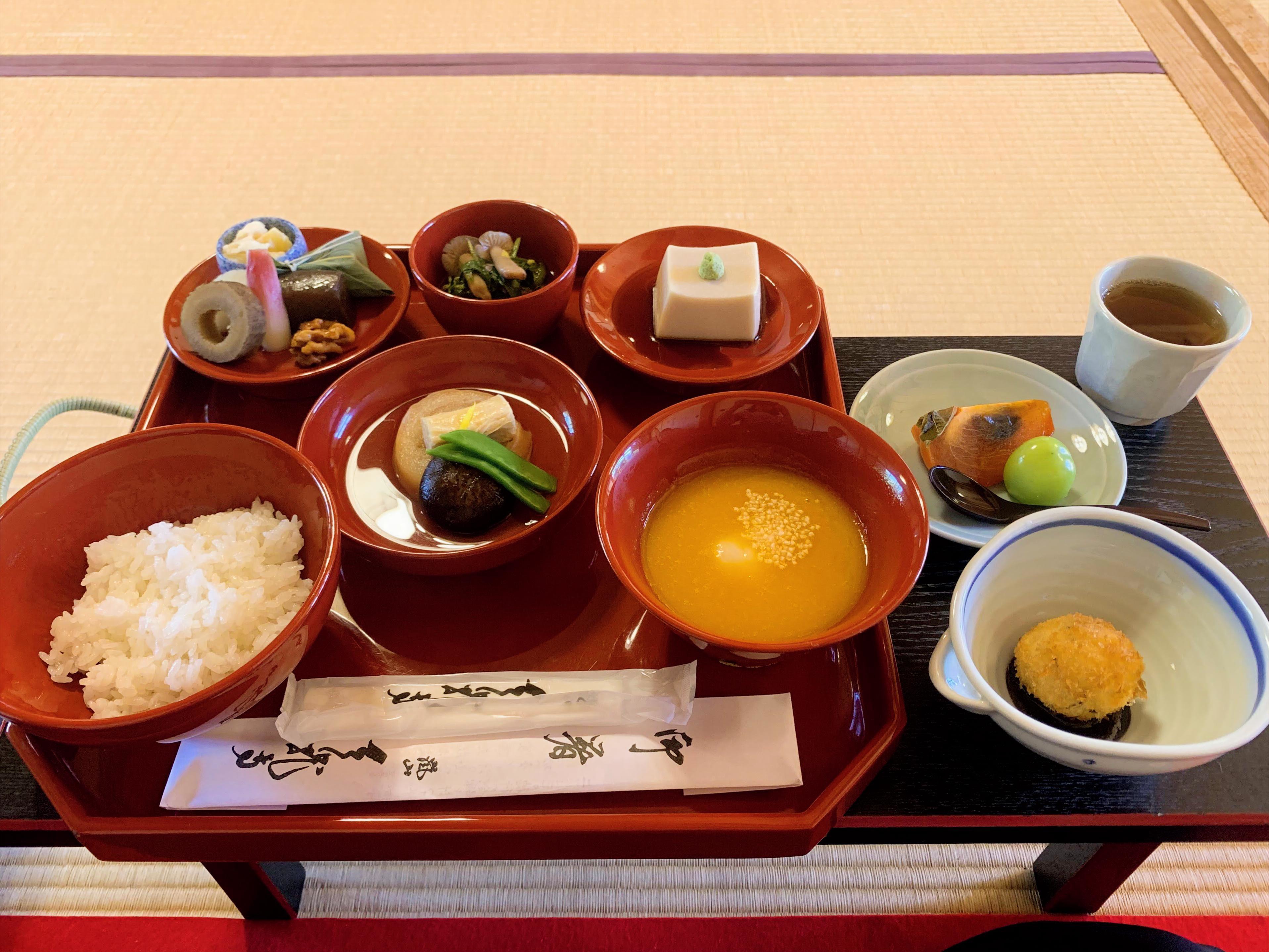
    My absolute favourite from the trip. Located within the serene Tenryuji Temple gardens in Arashiyama, Shigetsu serves Shojin Ryori, Zen Buddhist vegetarian cuisine, that’s as nourishing as it is beautiful. Every dish is prepared with seasonal ingredients and mindful simplicity.

    It’s best to book in advance as they often fill up quickly. The MICHELIN Guide Kyoto Osaka 2025 awarded Shigetsu a Bib Gourmand for “exceptionally good food at moderate prices.”

    Gyoza ChaoChao (Shijo-Kawaramachi Branch)

    A lively, popular spot for gyoza lovers, with a few delicious vegetarian options. Expect queues during peak hours, but service is quick and cheerful. (Note: Their Sanjo Kiyamachi branch does not offer vegetarian options.)

    Tokkyu Ramen

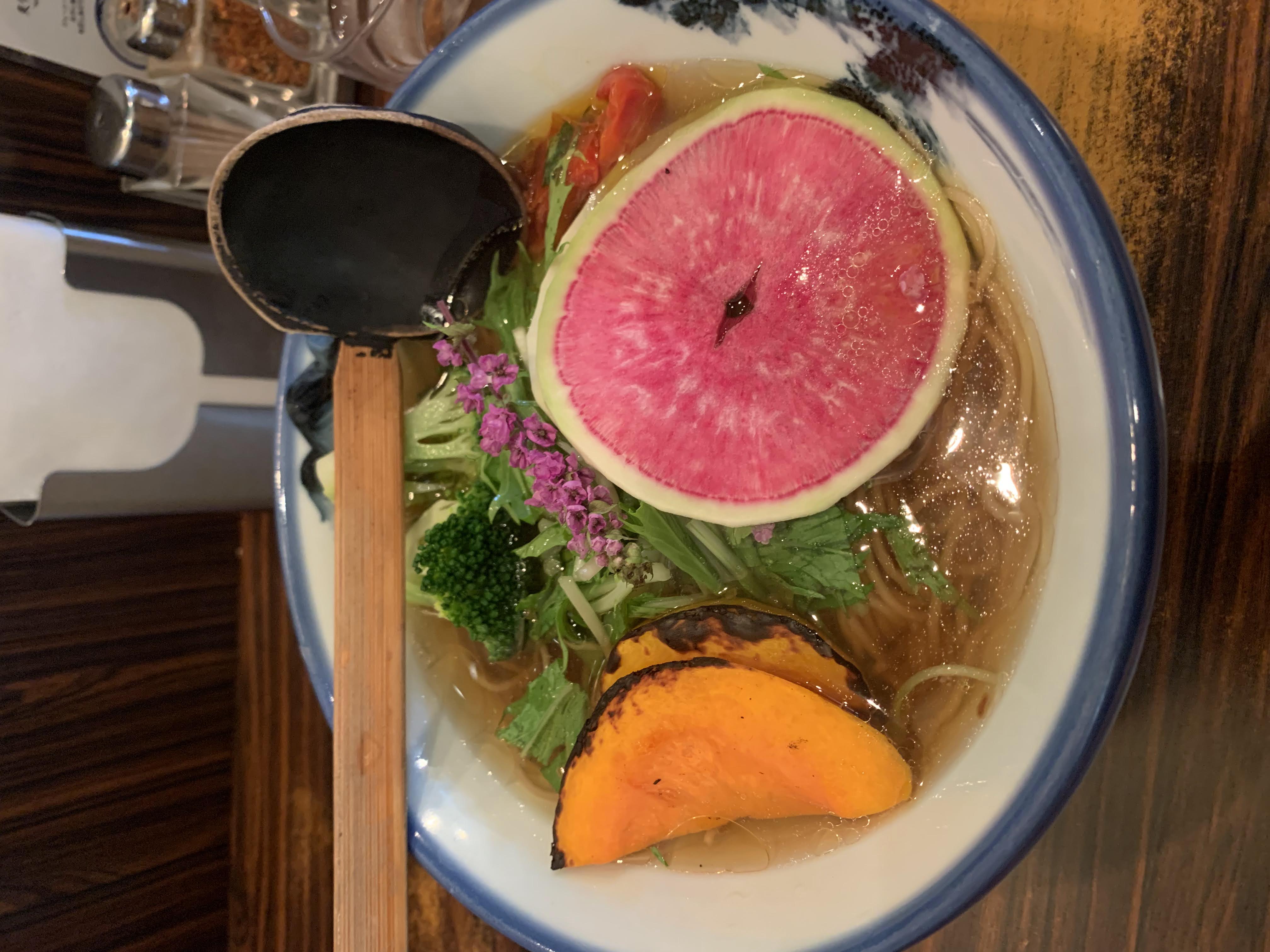
    The place may look a little worn out compared to what you’d typically expect in Japan, but the vegan ramen was freshly made and surprisingly tasty.

    Vegginy

    This one took me a while to find – it’s tucked away in a basement, even though Google Maps gets you close enough. A fully vegetarian and vegan café serving burgers, sandwiches, and bowls. While the food wasn’t extraordinary, it was a convenient and cozy choice on a rainy evening in the middle of a typhoon!

    Other Notable Vegetarian-Friendly Spots in Kyoto

    Gion & Higashiyama 

    • Tousuiro Gion – Kaiseki-style restaurant with vegetarian and vegan menus
    • Gion Soy Milk Ramen Uno Yokiko – Vegan and gluten-free ramen
    • Mimikou – Udon noodle restaurant with vegetarian options
    • Monk – Intimate restaurant featuring wood-fired pizzas and a seasonal tasting menu
    • Omen Ginkaku-ji – Udon and tempura restaurant with vegetarian options
    • Pettirosso Kyoto – Cozy café offering global and fusion vegetarian dishes
    • Village Natural Food – Vegan restaurant offering set lunches and varied menu options

    Downtown Kyoto

    • Mumokuteki Cafe & Foods – Popular vegan Japanese restaurant
    • Premarché Alternative Diner – Organic vegan spot known for its burgers
    • Ain Soph. Journey Kyoto – Elegant vegan restaurant serving beautifully plated dishes in a serene setting
    • Choice – Vegan restaurant with gluten-free options
    • ケパサ Que Pasa Downtown – Mexican restaurant with vegetarian options
    • Veg Out – Scenic vegan café with river views
    • Kichi Kichi Omurice – Famous for its theatrical chef; limited vegetarian options available
    • Vegan Ramen UZU Kyoto – A must-try for its immersive art-meets-food dining experience
    • Kyoto Engine Ramen – Ramen with vegetarian and vegan options

    Arashiyama, West & Central Kyoto

    • Little Heaven – Vegan restaurant known for its sushi
    • Itadakizen Kyoto – Highly rated vegan restaurant focusing on mindful dining
    • Yudofu Sagano – Specialises in tofu dishes, especially Kyoto’s signature yudofu (hot tofu)

    A little Further Away 

    • Yōshuji – Remote vegetarian restaurant near Kyoto’s outer shrines

    Stay tuned for my final post in this series, where I share my favourite vegetarian discoveries from the scenic regions around Kawaguchiko and Hakone.

  • Vegetarian in Japan: How I Thrived (Not Just Survived!)

    Vegetarian in Japan: How I Thrived (Not Just Survived!)

    Part 1: Tokyo

    One of the questions I get asked most often as a vegetarian traveller is, “How did you survive in Japan?”
    The truth is I didn’t just survive, I thrived!

    Japan turned out to be a haven for fresh, high-quality produce and simple, clean flavours that let the ingredients shine. From crisp tempura to delicate tofu dishes and flavourful noodle bowls, there’s plenty for a vegetarian to enjoy once you know where to look.

    For context, I’m an ovo-lacto vegetarian by choice, without any religious restrictions. That means I don’t mind the occasional trace of fish oil or food prepared in the same kitchen. 

    In this guide, I’ve highlighted:

    • Purely vegan restaurants
    • Places with reliable vegetarian options
    • Eateries that happily accommodated my dietary preferences even when they didn’t have a dedicated vegetarian menu

    Below, you’ll find a curated list of vegetarian-friendly restaurants in Tokyo, including places I personally visited and others that came highly recommended through my research. Whether you’re planning your first trip or returning for more, this list will make it easier to eat well (and deliciously) in Japan as a vegetarian.

    AFURI, Harajuku (& multiple locations)

    My very first bowl of ramen in Japan was the Rainbow Vegan Ramen at AFURI Harajuku. Located just a short walk from JR Harajuku Station, this spot is always buzzing – expect a line, especially during meal times. Luckily, it moves quickly, and soon enough you’ll be slurping a comforting bowl of noodles. While this is the only vegan dish on their menu, the freshly prepared broth makes it absolutely worth the wait.

    Gonpachi, Nishi-Azabu

    Famously known as the “Kill Bill Restaurant”, this lively Tokyo institution is a must-visit for the experience alone. It’s always packed, so reservations are highly recommended. Ask for their vegan or vegetarian menu, and the friendly staff will also gladly point out vegetarian-friendly dishes on their main menu, even when things get hectic.

    T’s TanTan, Ecute Ueno & Tokyo Station

    When I visited in November 2024, I tried the Ueno Station branch (which is now closed, possibly for renovation). A fully vegan ramen restaurant, T’s TanTan easily ranks among the best ramen and gyoza I’ve ever had! I loved it so much that I made another stop at their Tokyo Station outlet later during my trip.

    Pizza 4P’s

    I first discovered Pizza 4P’s in Hanoi, Vietnam, and was thrilled to find it in Tokyo too! They’re usually booked out well in advance, so reservations are a must. Thanks to a thoughtful friend who reserved early, I got to enjoy their mouth-watering dishes – I still dream of the marinated fruit and burrata cheese! Don’t skip this one if you love creative vegetarian Italian fare.

    Other Notable Vegetarian-Friendly Spots in Tokyo

    Shinjuku

    • Ain Soph. Journey Shinjuku – An elegant vegan restaurant serving beautifully plated Japanese and global cuisine in a serene setting.
    • Himawari Sushi Shintoshin – Conveyor-belt sushi with vegetarian options available on request.
    • ZEN Okonomiyaki – Cozy okonomiyaki spot offering customizable vegetarian and vegan versions.
    • Kiboko Organic Gallery & Wine – A hidden gem café and wine bar offering organic vegetarian dishes and natural wines in a cozy, art-filled space.

    Harajuku

    • Kyushu Jangara Ramen – Popular ramen shop near JR Harajuku Station known for its vegan-friendly ramen.

    Omotesando

    • bills Omotesando – Stylish Australian-inspired café known for its fresh produce, fluffy pancakes, and vegetarian brunches
    • Brown Rice by Neal’s Yard Remedies – Organic vegan restaurant in Omotesando offering traditional Japanese set meals in a calm, earthy space.

    Shibuya 

    • Masaka – A lively vegan izakaya offering Japanese pub classics with a plant-based twist.
    • Jikasei Mensho – Modern ramen bar known for its vegan tantanmen — a rich sesame broth with house-made noodles and bold flavor.

    Asakusa 

    • Injoy 悦納 – Warm and inviting vegetarian café serving vegan Asian dishes.

    Toyosu 

    • Vegan Ramen UZU Tokyo –  Located inside teamLab Planets Tokyo, this artful vegan ramen restaurant blends immersive visuals with refined flavours.

    This is Part 1 of my “Vegetarian in Japan” series — next up, I’ll be sharing my favourite Kyoto, Kawaguchiko, and Hakone finds, serving beautifully balanced vegetarian meals. Stay tuned for more plant-based adventures across Japan!

  • How I Travelled from Kawaguchiko to Hakone (and Why it was Worth it)

    How I Travelled from Kawaguchiko to Hakone (and Why it was Worth it)

    Anyone planning a trip to Japan has probably come across Hakone. Just a short hop from Tokyo, it’s a mountain town best known for its onsens, autumn foliage, and fleeting views of Mt Fuji. That was reason enough for it to make it onto my first Japan itinerary. 

    But when I sat down to plan, I noticed something: every single article told me how to get to Hakone from Tokyo. What if, like me, you’re already in Kawaguchiko? Would I really have to backtrack to Tokyo just to head out again the next morning? 

    I hit all the travel forums and on paper, the easiest way is to rent a car, about 55 km and a little over an hour’s drive. The second-best option is a patchwork of buses that should take 2.5 hours but often stretches longer. I get terribly car sick, and the thought of winding mountain roads didn’t appeal. Add in horror stories from other travelers who missed connections or got stuck for four hours, and I almost gave up. Then I stumbled upon this little-known route by train without having to go all the way to the heart of Tokyo, and that’s how I made it to Hakone, transfers and all. 

    Tip: If, unlike me, you’re planning to explore both Kawaguchiko and Hakone by road, look into the Fuji Hakone Pass offered by Odakyu. It covers round trip fares from Shinjuku to Odaware and transport across both regions – including buses, trains, the Lake Ashi cruise, and even the Hakone Ropeway. Valid for three days, it’s a convenient and cost-effective option that can save you both time and money. 

    The Journey

    I planned to reach Hakone by evening and took the Fuji Excursion (to Shinjuku) that leaves Kawaguchiko at 15:39. In under 90 minutes, I was at Hachioji, where I switched to the JR Yokohama Line toward Higashi-Kanagawa. Trains come every 8–10 minutes, so there’s no stress if you miss one.

    Next stop: Machida – just under half an hour away. From here, I transferred to the Odakyu Line express bound for Odawara. These run every 10-20 minutes, which gave me plenty of time to navigate the station.

    At Odawara, I boarded the Hakone Tozan Railway for a short 15-minute ride to Hakone-Yumoto. Trains run every 20 minutes, and before I knew it, I had arrived. All in, the journey took me around 3.5–4 hours with transfers, but it was seamless and never stressful.

    Since my hotel was in Hakone-Yumoto, this route worked perfectly. If you’re staying further in – around Gora, for example – you’ll need one more leg, but it’s still straightforward.

    Where I Stayed

    As someone with tattoos (and a little shy about public baths), I opted for Hotel Zagakukan, where spring water is piped directly into your room. It was a splurge but worth every yen. After days of rushing between trains and towns, soaking in private onsen waters was a true indulgence. The hotel also offers thoughtful extras – the kind of small touches that make you want to linger.

    Tip: if you have low blood pressure like I do, sip water steadily and don’t soak for too long, or you’ll end up lightheaded.

    My one real stop was Owakudani, Hakone’s volcanic valley. The air hung thick with sulfur, and suddenly – there was Fuji again, distant but striking nonetheless. It felt cinematic, like the mountain wasn’t quite done with me yet.

    Hakone, though, has much more to offer than I could fit in. Weather kept me from the Lake Ashi cruise, where you can board galleon-style sightseeing ships at Togendai Port and drift across the lake, with Fuji and Hakone Shrine’s torii gates as your backdrop. It’s high on my list for next time.

    Other Notable Stops in Hakone

    Okada Museum of Art
    Tucked into quiet greenery, this museum holds an incredible collection of Japanese and East Asian art. Even if art isn’t usually your thing, the serene gardens and foot bath café make it a restorative stop.

    Hakone Open-Air Museum
    An outdoor gallery where sculptures live among mountains and meadows. From sprawling lawns to forested corners, each piece feels part of the landscape. Don’t miss the Picasso Pavilion if you go.

    kuro-tamago or black eggs — eggs boiled in the natural hot springs whose shells turn black due to the sulfur and iron in the water. Eating one is said to add seven years to your life!

    Oh, and a special shoutout to BOX BURGER — by far one of the best veggie burgers I’ve ever had, made even better by the sweetest women who run the place. Sometimes it’s these little discoveries that make a journey unforgettable.

    And don’t forget to pick up some Hakone Rusk as omiyage from Grande Rivière Hakone Yumoto Store — it pairs especially well with coffee!

  • Beyond the Checklist: Slowing Down with Mount Fuji at Kawaguchiko

    Beyond the Checklist: Slowing Down with Mount Fuji at Kawaguchiko

    If you haven’t already read Part 1 of my rainy-day Kawaguchiko adventures, you can find it here.

    After the rain and mist of Day 1, Day 2 dawned with glorious blue skies and glorious views of the majestic Mt. Fuji. I’ll admit—I briefly considered cramming in everything I’d missed along with all that I still wanted to see. But sense prevailed. Instead of rushing, I chose to slow down and truly savor Fuji-san and his towering presence.

    First stop: Arakura Fuji Sengen Shrine
    The fastest and easiest way from my hotel was to ride the Fujikyuko Line (for Otsuki) to Shimo-Yoshida. On the way to Kawaguchiko station, I passed the now-famous Lawson convenience store. The barriers were down when I visited in November 2024, but I could see why they were necessary to preserve the quality of life for locals. Even early in the day, tourists were already queuing for that iconic photo. Did I pose? I cringe to admit that I did—but I was mindful of etiquette and tried to be as unobtrusive as possible.

    A short walk from Shimo-Yoshida station brought me to the base of Arakurayama, where the Arakura Fuji Sengen Shrine rests quietly in a grove of trees, its vivid red torii visible from afar. Built to pacify Fuji’s volcanic activity and natural disasters, it is one of many shrines dedicated to Fuji. I paused to pay my respects and received a goshuin, a hand-stamped calligraphed seal offered by the shrine maidens, who in their white robes were a graceful reminder of the shrine’s reverence.

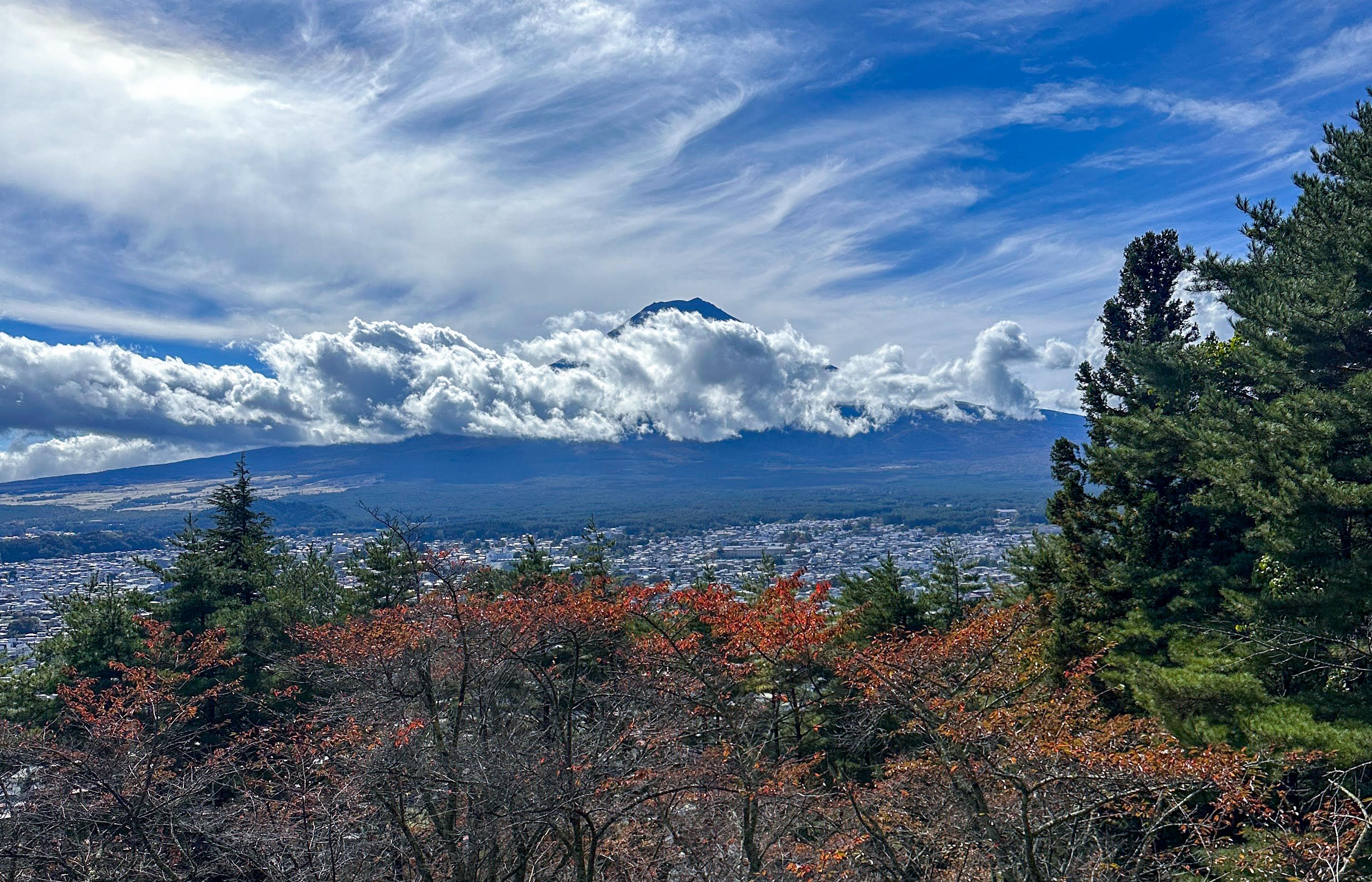
    From there, nearly 400 steps rise through the hillside forest, leading to the iconic Chureito Pagoda in Arakurayama Sengen Park. This five-storied pagoda, built as a peace memorial, stands watch over the town with Fuji framed in the background. You’ve likely seen the image countless times on postcards, in magazines, and on Instagram—but standing there in person felt different. More intimate. The quiet murmur of fellow travelers, the soft rustle of trees, the faint temple bells—all folding into the view. In spring, cherry blossoms frame the scene; in autumn, the maples blaze with fire. On my visit, the treetops had only just begun to tinge red, while Fuji-san played shy, peeking in and out of clouds. I lingered at the observation deck, content simply to breathe in the view.

    As I made my way down, fueled by locally brewed kombucha and ice cream, I noticed this young couple posing for photos on the steps. Their laughter and ease left me with a memory so vivid it still lives on, quite literally, as the lock screen of my phone

    Mt. Fuji Panoramic Ropeway

    With some time left before my train, I headed to the Mt. Fuji Panoramic Ropeway. In just a few minutes, it glides up Mount Tenjo to sweeping views over Kawaguchiko and, if you’re lucky, Fuji in all his glory. The long but quick-moving queue was easy to endure, especially as the lake unfolded beneath me during the ascent. At the summit, observation decks and walking trails revealed Fuji and the lake.

    Other places to visit if you have time

    Oshino Hakkai
    A short trip from Kawaguchiko, Oshino Hakkai is a cluster of eight crystal-clear ponds, fed by snowmelt from Mount Fuji filtered for decades through volcanic rock. 

    Fuji-Q Highland
    For something entirely different, Fuji-Q Highland delivers adrenaline with a view. The park is famed for its record-breaking roller coasters, each one designed to thrill while framing Fuji dramatically in the background. It’s a surreal juxtaposition—serenity and spirituality on one hand, sheer heart-pounding excitement on the other.

    And if you’re wondering why I haven’t mentioned the onsens, it’s because my next stop was Hakone—famous for its natural springs and a story for another day.